
Running a Sex Offender Check in Reeves County
The primary public channel is the Texas Public Sex Offender Registry. A person can search statewide data and narrow the results to Reeves County, a city, a ZIP code, or an address area. The Reeves County Sheriff’s records clerk is also the local sex offender registrar. That office is the practical contact when a Reeves County registry result appears stale, a local address needs clarification, or someone needs to report a possible failure to comply. NSOPW adds a national layer when the location may cross state or tribal boundaries.
A Texas DPS conviction name search answers a different question. The official DPS criminal-history instructions show the public conviction and deferred-adjudication product.
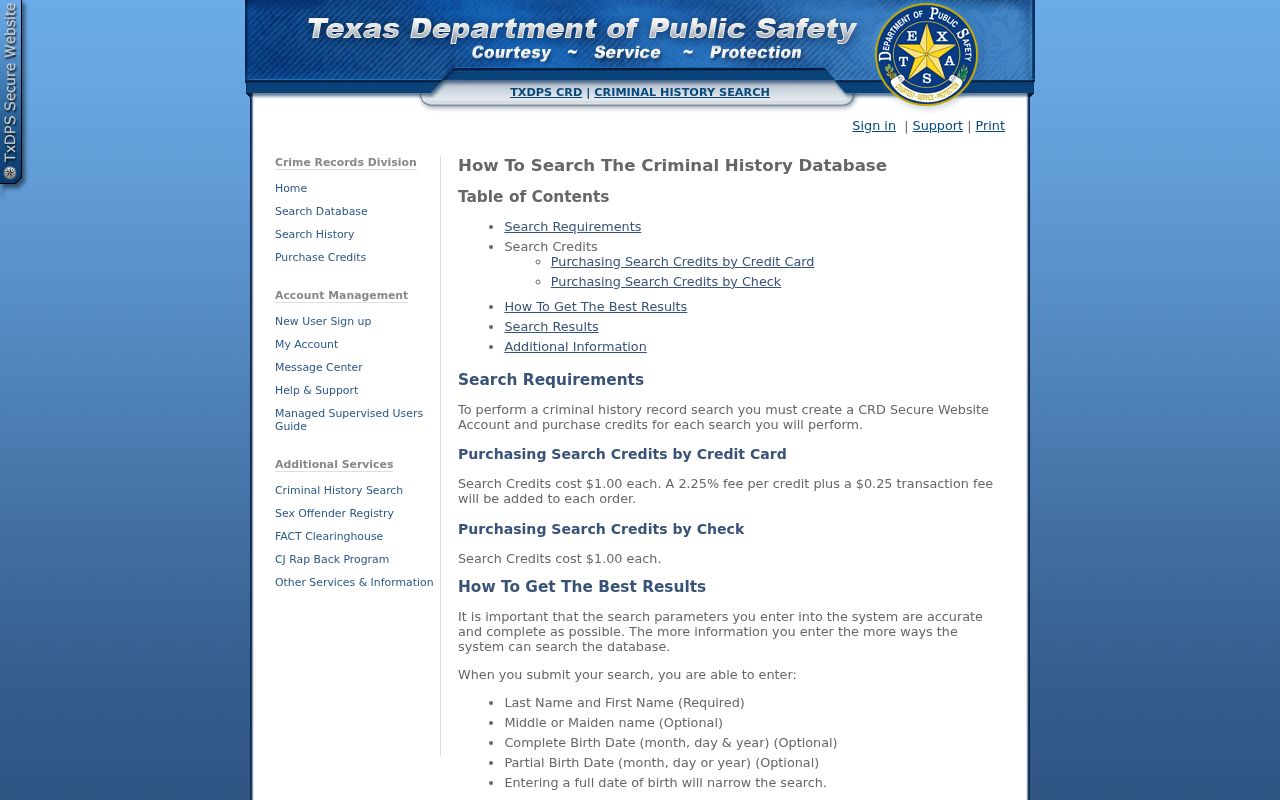
That image helps mark the boundary: a paid name-based criminal-history query is not the free Reeves County sex offender registry, and neither result should be treated as fingerprint proof of identity.
Reeves County Registry Records Desk
The Reeves County Sheriff administration page places local registry work with its records clerk and sex offender registrar. The desk is at 500 S. Oak Street, Pecos, with a direct records line at 432-447-5126 and email at mhernandez@reevescounty.org. The official Sheriff’s Office page supplies the main office route, while the county government directory is the fallback for current department routing. No separate online Reeves County offender map, posted registrar hours, or sheriff registry form was found. Call before making a trip, especially from Balmorhea or Toyah.
The registrar does not replace the statewide search. Local registration activity feeds the Texas system, while DPS compiles the public display. A focused question should include the city or area, the part of the profile that appears wrong, and the date the result was viewed. Do not send private victim information or try to obtain fields that state law keeps out of public view.
Reeves County Local Registrar
Reeves County Sheriff’s Office
500 S. Oak Street
Pecos, TX 79772
432-447-5126
mhernandez@reevescounty.org
Searching the Texas Public Sex Offender Registry
The Texas DPS registry search is free and does not require an account for a basic public query. It supports both identity and place-based routes. Use a name when checking a known person. Use an address, city, county, ZIP code, or the map workflow for community awareness near a place. Spelling, initials, and incomplete locations can change which candidate results appear.
- Open the official Texas registry and review its conditions of use.
- Enter a name or choose a location route, then set County to Reeves when appropriate.
- Review the result list carefully. Compare aliases and physical details instead of relying on one matching name.
- Open the full public profile and read the offense, address, risk, registration, and verification fields together.
The official registry interface includes the controls used for a Reeves County sex offender check.
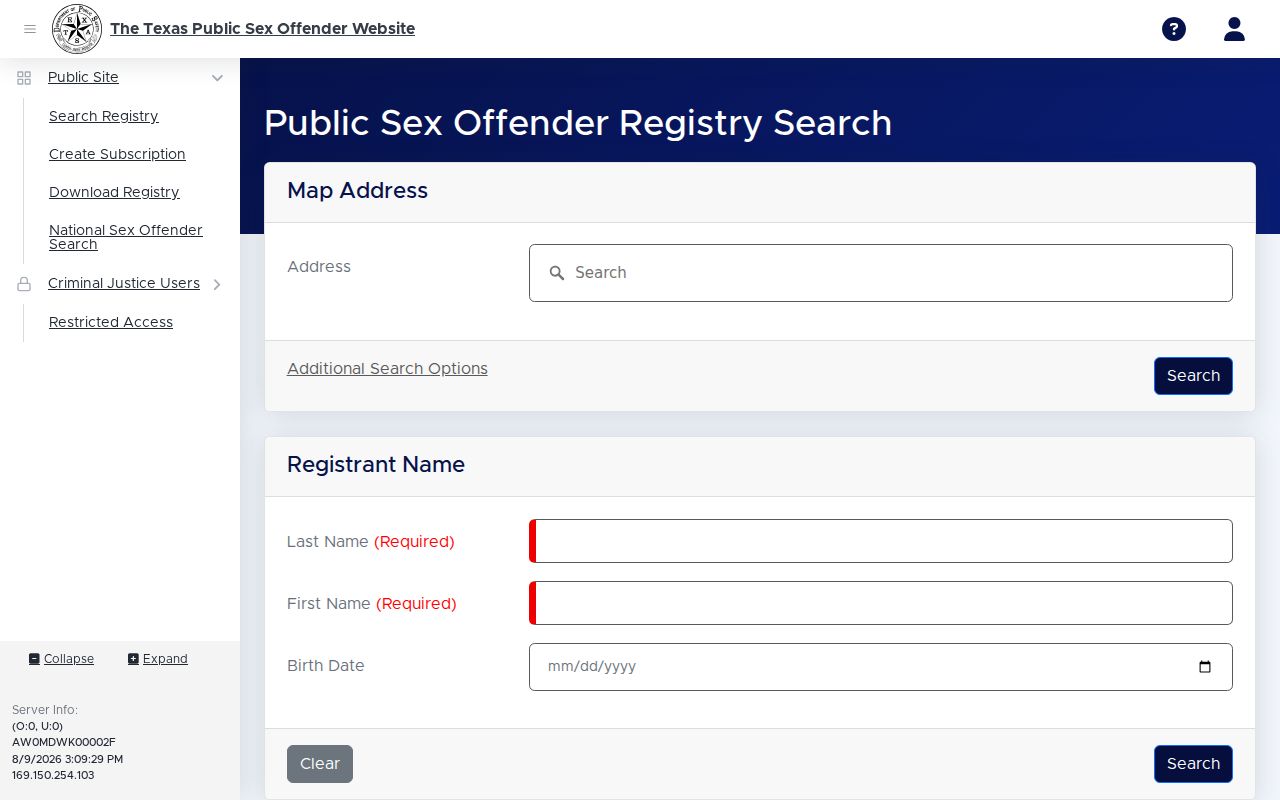
The screen confirms that both name and location searches are available, so a blank name result should not end a place-based check.
| Field Label | Type | Required | Notes |
|---|---|---|---|
| Last Name / Name | Text | Route-dependent | Spelling or initials can affect candidates. |
| First Name | Text | No | Narrows a name search. |
| Address | Text | Route-dependent | Supports a location search. |
| City | Text or dropdown | No | Use Pecos, Balmorhea, or Toyah as needed. |
| County | Dropdown | No | Select Reeves for a county filter. |
| ZIP Code | Text | No | Narrows the location area. |
| Map Search | Map/radius workflow | No | Centers a search on a place. |
Reeves County Registry Map Corrections
A map marker is a starting point, not a reason to confront anyone. First open the profile and check its address text, registration status, and verification information. Save the date of the search and note the exact field that seems outdated. Then contact the Reeves County registrar for a local Reeves County entry or use the DPS registry channel when the question concerns the state display.
Move dates, reporting schedules, map placement, and data processing can produce a gap between what a person expects and what appears. A searcher should describe the possible error rather than declare that someone has violated the law. DPS says failure to comply can be prosecuted as a felony, but that finding belongs to authorities. For an urgent threat or emergency, use emergency services rather than the records desk.
Note: A stale-looking map pin does not by itself prove that a Reeves County registrant failed to report a change.
What a Registry Profile Shows
A public profile combines identity clues, residence information, offense data, and registration status. Read several fields before deciding that a result refers to the intended person. Texas authorities collect more information than they publish. The public display can show names and aliases, a photo, physical features, address or geographic residence, offense and disposition details, a statutory risk level, registration status, scars or marks, and some qualifying vehicle or institution information.
| Name & Aliases | Public identity names that help separate people with similar names. |
|---|---|
| Photo & Physical Description | Photo, sex, race, height, weight, hair, eyes, and other public descriptors when displayed. |
| Registered Address | Public address or geographic residence information reported through the registration system. |
| Offense & Disposition | Reportable offense or statute plus relevant conviction or disposition dates. |
| Risk Level | Texas assessment label of low, moderate, or high for notification purposes. |
| Registration Status | Registration and verification information shown on the current public profile. |
| Other Public Details | Aliases, scars, marks, tattoos, institution ties, or qualifying vehicle information when public. |
A profile is a current public record, not a forecast of conduct. Confirm key facts with the agency that maintains the Reeves County registry entry.
Reeves County Registry Privacy Limits
Public access has firm limits. Article 62.005 of the Texas Code of Criminal Procedure makes most registry information public but excludes victim identity and specified personal or contact identifiers. The public Reeves County sex offender result does not display a Social Security number, driver-license number, phone numbers, online identifier, confidential additions required by DPS, or victim-identifying information.
Those exclusions serve a purpose. Registry users need enough facts to distinguish a profile and plan for safety, but they do not need private victim data or every identifier held by an agency. Juvenile registry information can also be ordered nonpublic. A missing juvenile result therefore is not proof that no registration record exists, and the public portal should not be used to guess at sealed or nonpublic details.
Reeves County Registry Risk and Duration
Texas risk and duration answer different questions. Low, moderate, and high are statutory assessment labels used for notification. They are not substitutes for federal Tier I, II, and III labels, and they do not set a simple matching registration term. Article 62.101 instead ties duration to the reportable offense and other statutory rules. Many listed offenses require registration for life. Other reportable convictions or adjudications generally run until the tenth anniversary of release from confinement or discharge from supervision, whichever comes later.
That distinction matters in every Reeves County sex offender check. A low-risk label does not prove a ten-year duty. A high-risk label does not by itself prove a lifetime duty. Read the offense and profile status, then verify the governing registration basis through official channels when the duration is material.
Registration Requirements and Levels in Texas
The Texas DPS registration program explains the state and local roles in registration and public notification.
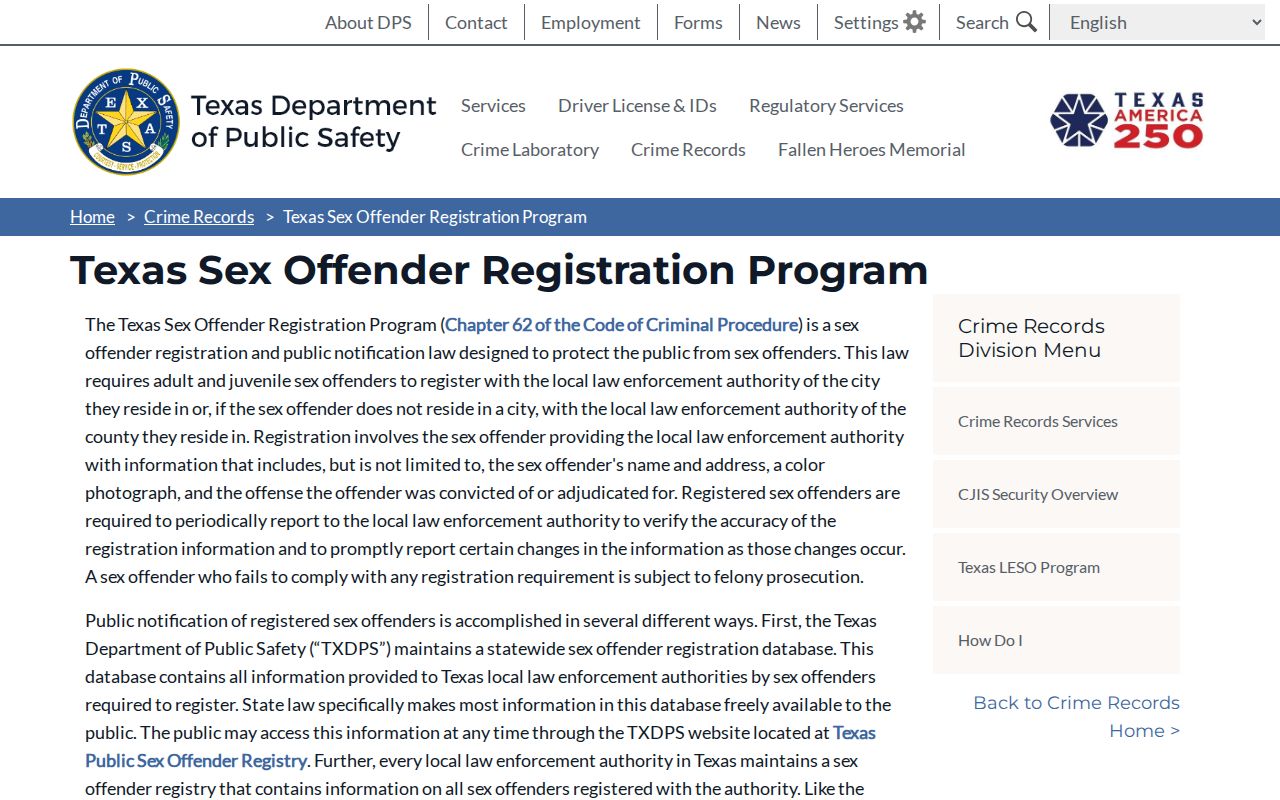
The program view reinforces that local verification, DPS compilation, public notification, risk assessment, and duration rules work together but remain separate legal concepts.
| Texas Category | Duration | Public Visibility or Role |
|---|---|---|
| Low risk | Not set by this label | Risk assessment used for notification; public profile rules still apply. |
| Moderate risk | Not set by this label | Risk assessment used for notification; check the offense-based duty. |
| High risk | Not set by this label | Can support broader notification, including mailed notice in qualifying cases. |
| Listed lifetime duties | Lifetime under Article 62.101 | Registry information is generally public, subject to statutory exceptions. |
| Other reportable duties | Generally ten years after later of release or supervision discharge | Profile remains subject to the exact offense and special statutory rules. |
| Special cases | Confirm from the governing provision | Juvenile and other rules can alter public access or the duty. |
Reeves County Registrant Verification Schedules
Verification frequency also stands apart from risk and duration. Article 62.058 generally requires annual verification. A person with two or more qualifying reportable events generally verifies every 90 days, while a sexually violent predator generally verifies every 30 days. These schedules are statutory categories, not a three-step scale that maps neatly onto low, moderate, and high risk.
The Reeves County registrar carries out local registration work, while the public profile may reflect verification and compliance information. Searchers should read the actual entry instead of calculating a due date from a risk label. If a profile seems overdue or inconsistent, provide the facts to the registrar. Authorities decide whether a reporting deadline applies and whether there has been noncompliance.
Note: Registration duration, verification frequency, and Texas risk level must each be read from its own legal and profile context.
Reeves County Registry and NSOPW
Use the Texas registry for the most direct state view of a Reeves County location. Use the U.S. Department of Justice’s NSOPW when the search crosses state, territorial, or tribal lines. NSOPW gathers public searches from participating jurisdictions, but it does not turn the source profiles into a single new federal record. A result still needs to be read at the contributing jurisdiction.
The official NSOPW search provides that cross-jurisdiction gateway.
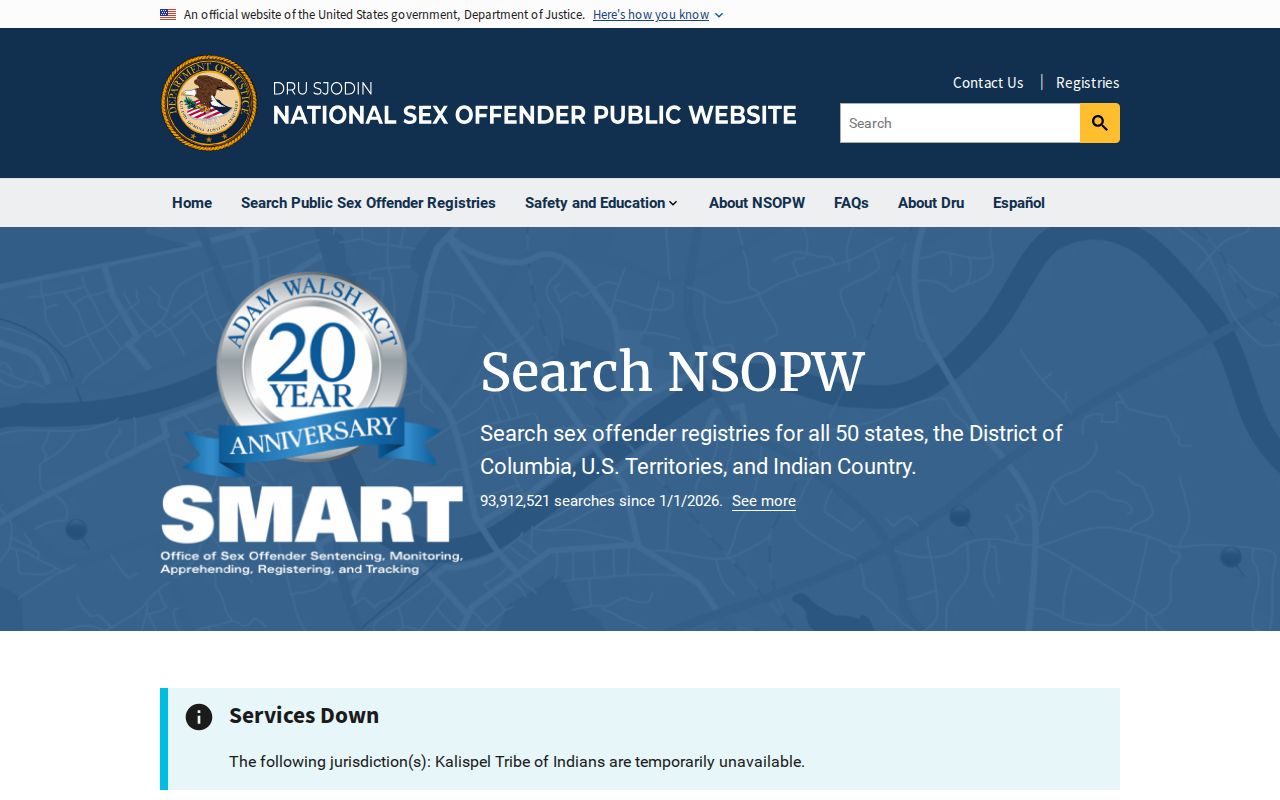
The national screen is useful when a person or address history extends beyond Texas, while the DPS result and Reeves County registrar remain the better sources for a local entry.
Lawful Use and Community Notification
Registry information supports personal safety, family planning, and community awareness. Texas generally makes registration information public, and high-risk or civilly committed notification can include mailed postcards. Publication is not permission to punish, confront, or shame a person. Use the record to understand the official status and choose safe, lawful steps. Report a possible compliance issue to the Reeves County registrar, and let law enforcement assess it.
Texas Code of Criminal Procedure Chapter 62 establishes the registration and notification system, including the public-information rules in Article 62.005. The DPS registry warning adds that information may not be used to injure, harass, or commit a crime against a registrant or the registrant’s family.
Registry misuse warning: Texas Code of Criminal Procedure Chapter 62 authorizes public safety and notification, not threats or vigilantism. Using registry information to harass, threaten, injure, or commit a crime is unlawful and can lead to criminal prosecution.