
How to Check Criminal History in Reeves County
A useful Reeves County record search starts by choosing the custodian. The clerk-linked LGS Online Records Search offers a Guest Login and is the first online stop for county court material. Yet the county does not publish the portal's criminal coverage years, refresh cycle, document prices, or a full guide to the screens behind the login. A result should therefore be treated as a lead to the court file, not proof that every local record has been found.
Have the full legal name, date of birth, known spelling variants, approximate date, and court or arresting agency ready. Then follow the record rather than the name:
- Use LGS Guest Login to look for a Reeves County court case.
- Ask the District Clerk about a felony or the County Clerk about a Class A or B misdemeanor.
- Check Pecos Municipal Court or the correct justice court for fine-only and lower-level matters.
- Use the sheriff jail page for present custody, then request the agency report from the office that made the arrest.
- Compare the final court disposition with a DPS name result or fingerprint self-review.
Note: A negative portal result does not clear Reeves County municipal, justice, sealed, juvenile, newly filed, or offline records.
Reeves County Criminal Records in LGS
The visible LGS gateway is simple, but its limits matter. Reeves County links it as the official online records route. Guests can enter without first creating an account. The public landing screen does not disclose which old files have been indexed or whether every case image can be downloaded. If a likely Reeves County criminal case is absent, contact the custodian that would own the file rather than trying more name spellings forever.
| Gateway control | What it does | How to use it |
|---|---|---|
| Email Address | Account sign-in field | Use with an existing account |
| Password | Account credential | Required for account login |
| Guest Login | Public entry route | Start here without an account |
| New Account | Registration route | Create access when guest tools are not enough |
| Forgot Your Password | Account recovery | Use for a known account |
| Questions | Portal help route | Use for system access trouble, not legal advice |
The local fallback depends on charge level. The District Clerk keeps 143rd District Court felony files on the courthouse second floor. The County Clerk keeps misdemeanor records in Suite 101 and has a dedicated criminal-record contact at extension 452. Pecos Municipal Court and four justice courts maintain their own lower-level files. That split explains why one search tool cannot answer every criminal-history question.
Official Texas Background Checks
The Texas DPS Criminal History Conviction Name Search is the state's public name-based product. It returns public Texas conviction and deferred-adjudication information submitted to DPS. A person creates an account, buys credits, enters identifying details, reviews possible matches, and chooses whether to open a record. Soundex and similar-name logic can produce partial candidates. DPS places the identity decision on the user, so a name result should never be described as fingerprint-confirmed.
For a review of your own Texas record, DPS directs applicants to Fingerprint Applicant Services of Texas through IdentoGO or IDEMIA. Fingerprints link the request to identity more reliably than a name. No stable, permanent IdentoGO site was verified inside Reeves County, so use the live ZIP and date locator before planning travel. The FBI Identity History Summary is a separate, fingerprint-based subject-only route for a federal summary. It is not an open name search.
| DPS online name search | $1 credit per search action, plus the documented card transaction charges; one credit is used even when no record matches. |
|---|---|
| DPS offline public check | $10 according to the inspected DPS FAQ. |
| DPS personal fingerprint review | $15 DPS record fee plus the normally listed $10 FAST capture fee; service-code totals may vary. |
| District Clerk search | $5 for a civil or criminal name search, $1 per written or emailed page, and $5 per certification. |
| County Clerk search | $10 for a criminal search, $1 copies, and $5 certification. |
Fees can change. Obtain a live quote before ordering a large record set, and do not combine the separate FAST, DPS, FBI, or clerk charges into one supposed statewide price.
Three Reeves County Criminal Record Systems
Reeves County criminal history is not one file. A clerk case, the sheriff's custody report, and the DPS repository describe different stages. A court file can show a complaint, indictment or information, hearings, plea, disposition, sentence, and costs. The jail's periodically replaced “Inmates in Custody” PDF is only a present-custody list. DPS compiles reported Texas arrest cycles and dispositions, while its public product reveals only the part the law allows for general name searches.
| Question | Best Reeves channel | Main limit |
|---|---|---|
| Is someone in local custody now? | Sheriff jail page, phone, or lobby | Release or transfer removes a person from a current list |
| What happened after charges were filed? | District, County, Municipal, or JP clerk | Each court holds only its own cases |
| What public Texas history did DPS receive? | DPS Conviction Name Search | Name candidates are not identity verified |
| What is on my own Texas record? | DPS fingerprint self-review through FAST | Requires fingerprints and the official process |
The sequence also matters. An agency report may exist before a clerk opens a case, and a booking charge can change after prosecutor review. Courts and custodial agencies later report outcomes to DPS. A lag or missing disposition should be checked against a certified Reeves County court record before using the DPS inaccurate-data process at 512-424-7256.
Types of Criminal Records
Each Reeves County criminal record has a purpose and owner. The Reeves County Sheriff or another arresting agency creates the incident and arrest report. The jail creates the booking and custody entry. Prosecutors file complaints, informations, or indictments that become part of a court case. Court clerks preserve the docket and final outcome. Texas DPS receives qualifying criminal-history data from justice agencies, while the sheriff's records clerk also serves as the local sex-offender registrar.
- Incident and arrest reports: agency narratives and arrest details, which can include protected investigative material.
- Booking and custody records: intake and current confinement data, not a finding of guilt.
- Court case files: charges as filed, hearings, pleas, orders, dispositions, and sentences.
- Warrants and capiases: court or law-enforcement commands that may sit in separate local systems.
- Supervision and registry records: probation, parole, and registration data governed by distinct access rules.
Adult probation in Reeves County is administered through the local Community Supervision and Corrections Department at 700-A Daggett in Pecos. Parole is post-prison release supervised by the TDCJ Parole Division after Board action. Neither status means a case was dismissed. The sentencing docket is the sound first source for the order and any later motion to revoke or adjudicate.
Texas offense levels also determine the Reeves County court route. Capital, first-degree, second-degree, third-degree, and state-jail felonies go to the 143rd District Court. The researched statutory ranges run from 180 days to two years for a state-jail felony up through life or death where legally available for a capital felony, with special juvenile rules. First-, second-, and third-degree felonies carry the distinct ranges set by Penal Code Chapter 12, and felony fines can reach $10,000.
Class A and B misdemeanors go to the County Court at Law. Class A can carry up to one year in jail and a fine up to $4,000; Class B can carry up to 180 days and a fine up to $2,000. A Class C misdemeanor is fine-only, up to $500, and belongs in a municipal or justice court based on agency and venue. Enhancements can change punishment, and the charge on a jail list can change after prosecutor review, so confirm the filed level with the clerk.
Reeves County Warrant Record Chain
No official countywide warrant portal, statewide Texas warrant search, or Reeves County sheriff app was verified. The safe path is to identify the issuing court. Pecos Municipal Court issues warrants within its jurisdiction. Each justice court is a separate bench-warrant or capias channel. County and felony matters may require both the relevant clerk and the sheriff. Sealed warrants, unserved indictments, juvenile matters, and new entries may not appear in a public result.
For a possible warrant tied to your own case, contact the issuing court for status and instructions. Confirm bond or payment terms directly because Pecos Municipal Court's official materials conflict about cash. Do not use the sheriff CID tips number as a warrant-clearance or records line. The sheriff records desk is reached at 432-447-5126, while court staff can verify whether a case number and warrant belong to their docket.
A negative search is not clearance. A Reeves County warrant can sit with a municipal, justice, county, or district court and may not be public.
What a Reeves County Criminal Record Shows
The contents depend on the source. A Texas criminal-history cycle may connect names, aliases, birth details, physical descriptors, a State Identification number, and fingerprint transaction identifiers to an arresting agency, arrest date, offense codes, court tracking, and reported disposition. Public access is narrower than what authorized criminal-justice agencies can see. Reeves County court systems instead center the file on a case number, court, filing date, parties, charge, docket events, outcome, costs, and sentence.
- Name and identifiers
- Legal name, aliases, birth details, and, in official history systems, state or fingerprint transaction identifiers.
- Arrest and booking data
- Arrest date, arresting agency, booking event, and initial charge or warrant information.
- Charges and statutes
- Offense name, level, statute citation, and the charge accepted or changed by the prosecutor.
- Disposition
- The recorded result, such as conviction, dismissal, acquittal, or deferred adjudication.
- Sentence
- Jail or prison term, fine, costs, restitution, or community-supervision order where applicable.
- Custody or supervision
- Current location, release data, probation order, or parole information from the proper custodian.
A roster is not a rap sheet, and “disposed” does not by itself explain the result. Read the actual disposition. “Deferred adjudication” means the court withheld a final finding of guilt while imposing supervision under an order. A “capias” is a court writ directing an arrest. “Community supervision” is the Texas term for court-ordered supervision in the community.
Reeves County Criminal Data in Context
The 2025 DPS Border Crime report gives a useful warning about labels. Pecos Police reported for all 12 months and had used NIBRS since January 2019. The selected table lists 143 reported offenses: 75 assaults, 46 larceny or theft offenses, 10 burglaries, eight motor-vehicle thefts, two rapes, and two robberies, with zeros in the other displayed categories. The report uses an agency report population of 9,650.
Those 143 events are not 143 arrests or 143 convictions. They are offense reports within selected categories for one reporting agency. One incident can contain more than one offense, an investigation may not lead to an arrest, and a filed case can end in dismissal or acquittal. The figure also cannot stand in for sheriff, state, school-district, or federal activity. Always match a statistic to the agency and record stage it measures.
Public Access Laws
The Texas Public Information Act governs many records held by Reeves County agencies. It requires prompt handling of available public information, but it does not make every report public. If an agency seeks an Attorney General decision to withhold material, the law generally sets a ten-business-day deadline for that request. Ten business days is not a promise that the full file will be produced by then.
Court case files follow court-record rules and common-law access, not the administrative public-information process in every respect. Ask a clerk for an indictment, judgment, or docket. Use a focused TPIA request for a sheriff or police incident report. Active-investigation detail, intimate private information, motor-vehicle identifiers, victim data, and juvenile material can be withheld or redacted. A requester can ask for the separable public part and a cost estimate.
Key Texas laws:
Government Code Chapter 552 sets the public-information baseline and the prompt-production process.
Government Code §552.108 can protect law-enforcement and prosecution material while leaving some basic information available.
Government Code Chapter 411 controls criminal-history confidentiality, public DPS access, and nondisclosure.
Code of Criminal Procedure Chapter 55A governs expunction of qualifying records.
Code of Criminal Procedure Chapter 62 defines sex-offender registration duties and public fields.
Remote Reeves County Criminal Record Access
Distance is a real records issue in Reeves County. The county covers 2,635.35 square miles, while the courthouse, sheriff, jail, Pecos Police, and most justice offices cluster in Pecos. Balmorhea and Toyah residents may face a long trip for a counter visit. Phone, email, mail, and a precise written request are therefore core access channels, not mere conveniences.
District Clerk
143rd District Court felony files
100 E. 4th Street, second floor
Pecos, TX 79772
432-287-0222, option 6
DistrictClerk@reevescounty.org
County Clerk
Class A and B misdemeanor records
100 E. 4th Street, Suite 101
Pecos, TX 79772
432-287-0222, option 3
Criminal records: extension 452
Sheriff Records
Incident, arrest, booking, and registrar routing
500 S. Oak Street
Pecos, TX 79772
432-447-5126
mhernandez@reevescounty.org
The District Clerk warns that services are unavailable during docket and asks visitors to call ahead. Many requests can be discussed by phone, but official filings cannot be faxed or emailed. The County Clerk remains open through lunch on posted weekdays. The sheriff publishes no special records-counter hours or local copy-fee table, so ask the records clerk about format, cost, and routing before sending a broad demand.
For a Pecos Police incident, send the request to that department instead of the sheriff. Pecos accepts a written request by mail, email at pdinfo@pecostx.gov, fax at 432-445-9780, or at the counter at 172 Raul Florez Boulevard. Its form asks for the incident number, people involved, date, time, location, and the requested scope. For sheriff records, identify the event, date range, agency, location, known case number, and desired format in a focused TPIA request.
Sealed, Expunged & Restricted
Texas uses two distinct forms of relief. An expunction under Code of Criminal Procedure Chapter 55A can require the return or destruction of qualifying records and permits denial of the event in many settings. Eligibility depends on the full arrest transaction and outcome, including acquittal, pardon, certain dismissals or no-bills, waiting periods, and statutory exceptions. A final conviction does not become eligible merely because time passed.
An order of nondisclosure under Government Code Chapter 411 restricts public dissemination while leaving the record available to criminal-justice agencies and other entities named by law. It does not physically erase the case. Some deferred adjudications or convictions may fit a specific provision, while violent, sexual, family-violence, and other listed offenses can be excluded. Juvenile records follow a separate confidentiality framework under Family Code Chapter 58.
- Correction
- Fixing an inaccurate or missing entry, such as a DPS record that remains pending after a court dismissal.
- Expunction
- A destruction or return remedy for records tied to a qualifying arrest and outcome.
- Nondisclosure
- A limit on public release that still permits access by agencies and entities authorized by statute.
- Certified disposition
- The clerk-certified court result used to audit an entry or support a petition.
Start with a certified disposition from the right Reeves County clerk. Review all charges from the arrest, identify every custodian, and ask the court about the current filing fee because no complete local expunction price was verified. After an order, retain certified copies and later compare the official county and fingerprint-based DPS records. Error correction and legal relief solve different problems.
Federal Reeves County Criminal Records
Federal charges do not appear in the Reeves County LGS portal. Reeves County lies in the Pecos Division of the Western District of Texas, and federal prosecutions are filed in the federal district court. The Lucius D. Bunton III U.S. Courthouse and District Clerk are at 410 South Cedar in Pecos. PACER is the official electronic docket route, while the Bureau of Prisons locator covers sentenced people in federal custody. Neither source replaces local jail, state prison, or Texas court records.
The official PACER source shows the federal case-record access landing page.
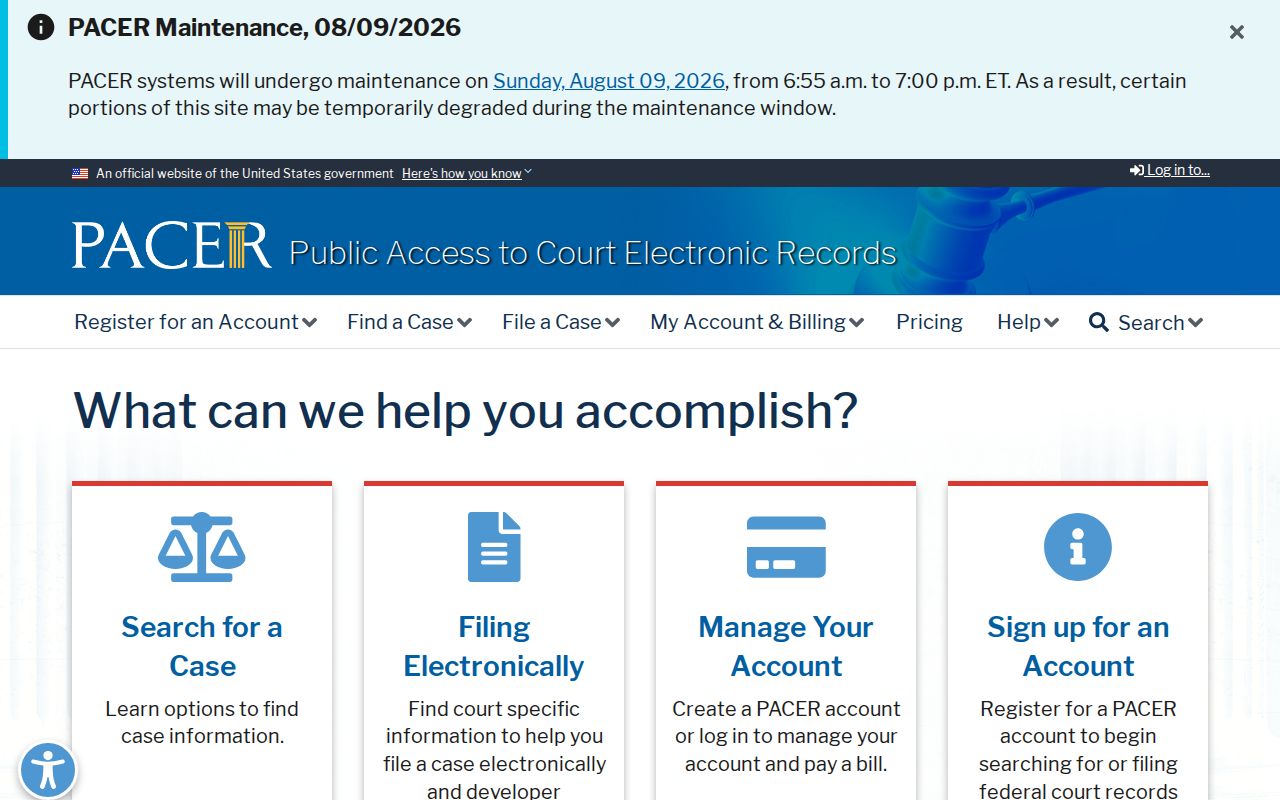
This access layer matters when one Pecos-area event creates both state and federal files. A PACER docket can show the federal case, but it will not serve as a Reeves County custody report or Texas criminal-history check.
The Federal Bureau of Prisons locator provides the official name and identifier search for people in BOP custody.
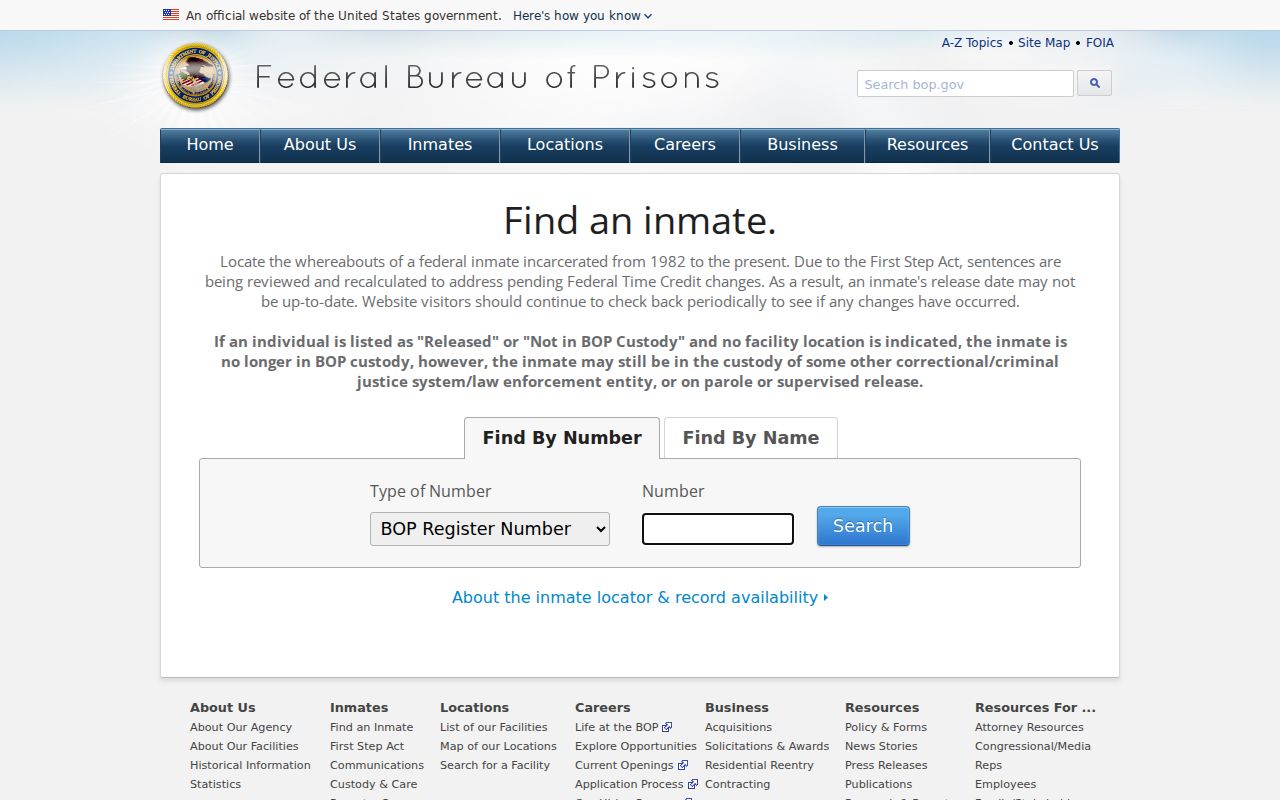
A “released” or “not in BOP custody” result does not rule out local detention, pretrial Marshal custody, Texas prison, or community supervision. Search by BOP, DCDC, FBI, or INS number when known, or use first and last name with age, race, and sex filters.
Criminal Records by City in Reeves County
Reeves County's three incorporated cities do not have equal local record systems. Pecos has a verified police department and Municipal Court. Balmorhea has a City Hall routing form and a justice court, but no current municipal court or city police records page was found. Toyah has no verified town police or municipal court portal. In all three, the responding agency and the level of the filed charge determine where the record belongs.
Pecos Criminal History
2024 estimate: 13,204. Pecos Police accepts written report requests, and Municipal Court handles fine-only city matters.
Balmorhea Criminal History
About 400 residents. City Hall can route city questions, while Sheriff, JP Precinct 3, and county clerks hold justice records.
Toyah Criminal History
2024 estimate: 64. Identify the responding agency, then use sheriff, justice, county, or district channels.
Balmorhea Reeves County Criminal Record Routing
Balmorhea shows why local government contact is not the same as a criminal-record database. Its official City Hall form includes a department choice, name, email, optional phone and account number, service address, subject, and message. The form also warns that email correspondence is retained under state law and may be public. It can route a city-government question, but it is not a police-report request portal.
The official Balmorhea City Hall source shows the contact and routing interface.
For law-enforcement records, use the sheriff or the actual responding agency. JP Precinct 3 is based in Balmorhea, but it is a county justice court, not a city municipal court.
The Texas Parks and Wildlife Balmorhea history source documents San Solomon Springs and the Civilian Conservation Corps work that shaped the community.
The community's deep history and large visitor draw do not establish a crime trend. They explain why a place can have many contacts without having its own police record counter. Records from an incident near Balmorhea still follow the agency, court, and custody channels that created them.